Stop The Tsunami Materials Tier List
Packed sand to concrete鈥攚hat belongs on the wall face as waves grow and the shoreline pulls back.
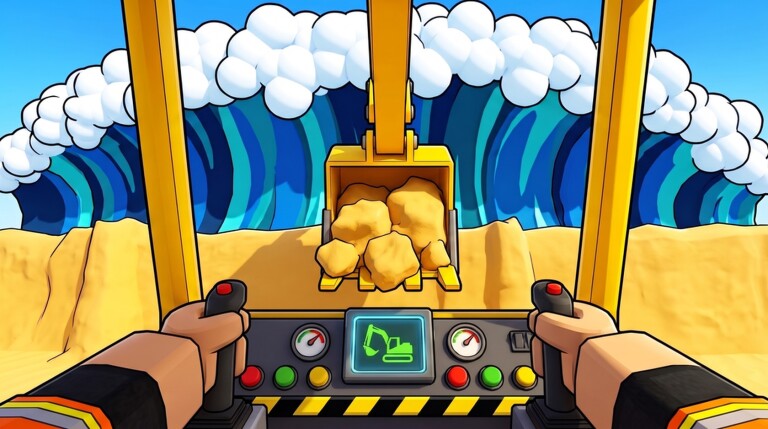
Digging wins the clock; materials win the collision. In Stop The Tsunami! you pile sand into walls, carve trenches, pack everything hard, then press START ROUND and hope the crest holds. Early rounds forgive soft sand if packing is honest. Later stages clear the beach, the sea pulls back, the shoreline widens, and the same sand line that survived Easy collapses under Hard. This tier list ranks fill from best to worst for holding power once volume is already in place: Concrete > Clay > Boulders > Gravel > packed Sand.
Pair this page with the Machine Tier List so haul capacity matches the materials you unlock, and with Build Defenses for wall and trench technique. Hard-mode specifics live in Hard Mode.
S tier 鈥?Concrete
Concrete is the late-game answer to monster waves. When the full beach is open and Easy habits stop working, poured concrete gives the densest, most reliable face you can place on a packed foundation. It is expensive in time and logistics: you need machines that can haul and place it, plus a wall already shaped so you are not wasting concrete on gaps and low spots. Treat concrete as a finishing layer on critical sections鈥攅specially the center face that takes the first impact鈥攔ather than a cosmetic coat on unfinished sand piles.
Concrete stays S because nothing below it matches end-stage impact as consistently. If your crew can dig and pack quickly with excavators and dump trucks but still fails Hard, the missing piece is usually concrete (or clay right behind it), not another shovel upgrade.
A tier 鈥?Clay
Clay is the sculpting upgrade before full concrete coverage. It shapes stronger contours than gravel or loose rock and bridges the gap when concrete is still scarce. Use clay to reinforce the upper crest and trench lips after sand packing is done. In co-op, one player can sculpt clay while another hauls boulders or queues concrete for the next clear.
Clay ranks A instead of S only because concrete still outlasts it on the hardest hits. On Medium and early Hard, a clay-heavy wall with excellent packing often clears more efficiently than a thin, poorly placed concrete strip.
B tier 鈥?Boulders
Boulders add mass and break-up to the wave鈥檚 energy. Dropping boulders into key points of the line creates anchors that packed sand alone cannot match. They shine when the beach has widened and you need bulk fast, especially if clay and concrete unlocks are still a few coin sinks away. Boulders are less flexible than clay for fine shaping, so place them where weight matters and keep sand or clay for sealing gaps between rocks.
Dump truck access matters here. Boulders stranded far from the wall waste a prep window. Coordinate haul routes before START ROUND so boulder drops finish with time left to pack around them.
C tier 鈥?Gravel
Gravel is the first real step above pure sand for many runs. It improves drainage-like disruption of the wave and adds grit to packed sections without the full cost of boulders or clay. Rank it C for endgame power, but respect it as a strong mid unlock: gravel mixed into a well-packed sand core often carries Medium when pure sand starts leaking.
Do not stop at gravel once Hard is the goal. It is a bridge material鈥攅xcellent for widening coverage quickly, weaker as a solo face against late monster waves.
Baseline 鈥?Packed sand
Packed sand is the foundation of every early wall and trench. Unpacked piles fail; packed sand holds. The tier gap is not 鈥渟and is useless鈥濃€攊t is 鈥渟and alone stops scaling.鈥?Early Easy and learning Medium should be almost entirely sand volume plus ruthless packing. As clears push the shoreline back, keep sand for bulk and filler, then overlay gravel, boulders, clay, and concrete on the impact face.
Packing is a material multiplier. A concrete sprinkle on fluffy sand underperforms a fully packed sand berm with gravel reinforcement. Always pack before you spend rare fill.
Walls, trenches, and a widening beach
Walls need height, continuous face, and a packed core. Trenches help redirect and sap energy before the main crest. When a stage clears and the beach widens, rebuild wider鈥攏ot taller only. Long thin walls crack; short overbuilt stubs leave flanks open. After each clear, walk the new shoreline, extend the trench line, pack again, then decide which higher material upgrades the center face.
Difficulty changes the material schedule:
- Easy 鈥?master packed sand and trench discipline.
- Medium 鈥?introduce gravel and boulders; punish soft packing.
- Hard 鈥?prioritize clay and concrete sooner; expect monster waves on the full beach.
Daily Spin and Beach Club Rewind help you recover from a bad spend or a failed experiment, but they do not replace a material plan. Shared co-op wallets mean one player dumping all coins into concrete while the wall is still half-height taxes everyone鈥攕hape and pack first.
Spend advice with machines
If haul is weak, buying concrete early creates inventory you cannot place in time. Climb toward dump truck and excavator support as described on the Machine Tier List, then convert surplus coins into clay and concrete. Solo players should alternate dig sessions and material runs; crews should assign a dedicated hauler once gravel and above appear.
Related pages
Creator jzf25 may tune material unlocks or wave force. When that happens, keep the order concrete > clay > boulders > gravel > packed sand as the default philosophy unless patch notes clearly invert late fill strength.
Frequently Asked Questions
Quick answers for Stop The Tsunami players.
What is the best building material in Stop The Tsunami?
Concrete ranks highest for late monster waves, followed by clay, boulders, gravel, then packed sand as the volume baseline.
Is packed sand still worth using late?
Yes for bulk and filler. Use sand to shape and pack the core, then reinforce the impact face with gravel through concrete as the beach widens.
When should I start using gravel and boulders?
Move into gravel on Medium when pure sand leaks, add boulders for mass on wider beaches, then climb to clay and concrete for Hard.
Do trenches matter as much as wall materials?
Yes. Trenches sap energy before the crest. Pair good trench work with packed cores and higher-tier face materials.
Why did my concrete wall still fail?
Usually the foundation was unpacked, coverage was too thin, or flanks were open after the beach widened. Pack first, then place concrete on critical sections.